From sample to answer.
Providing accurate, reliable, and timely environmental water and industrial effluent analytical testing.
Accurate water science supporting industrial compliance.
FGS Environmental Laboratory Sdn Bhd was established in 2024 and commenced operations in early 2026 as a dedicated environmental analytical testing facility.
Our core specialization is comprehensive water and wastewater analysis. We evaluate discharge points, natural receiving waters, monitoring boreholes, and industrial processes to ensure accurate data for regulatory submissions and environmental stewardship.
Rigorous quality control protocols, duplicate analyses, and calibrated analytical instruments.
Aligned with Department of Environment (DOE) Industrial Effluent Regulations and National Water Quality Standards.
Streamlined sample handling and testing workflows to support client compliance deadlines.
Direct access to chemists and technical specialists to interpret analytical findings and exceedance risks.
Strict non-disclosure and secure data management safeguarding all client industrial testing results.
Uncompromising adherence to scientific principles and honest reporting across every test batch.
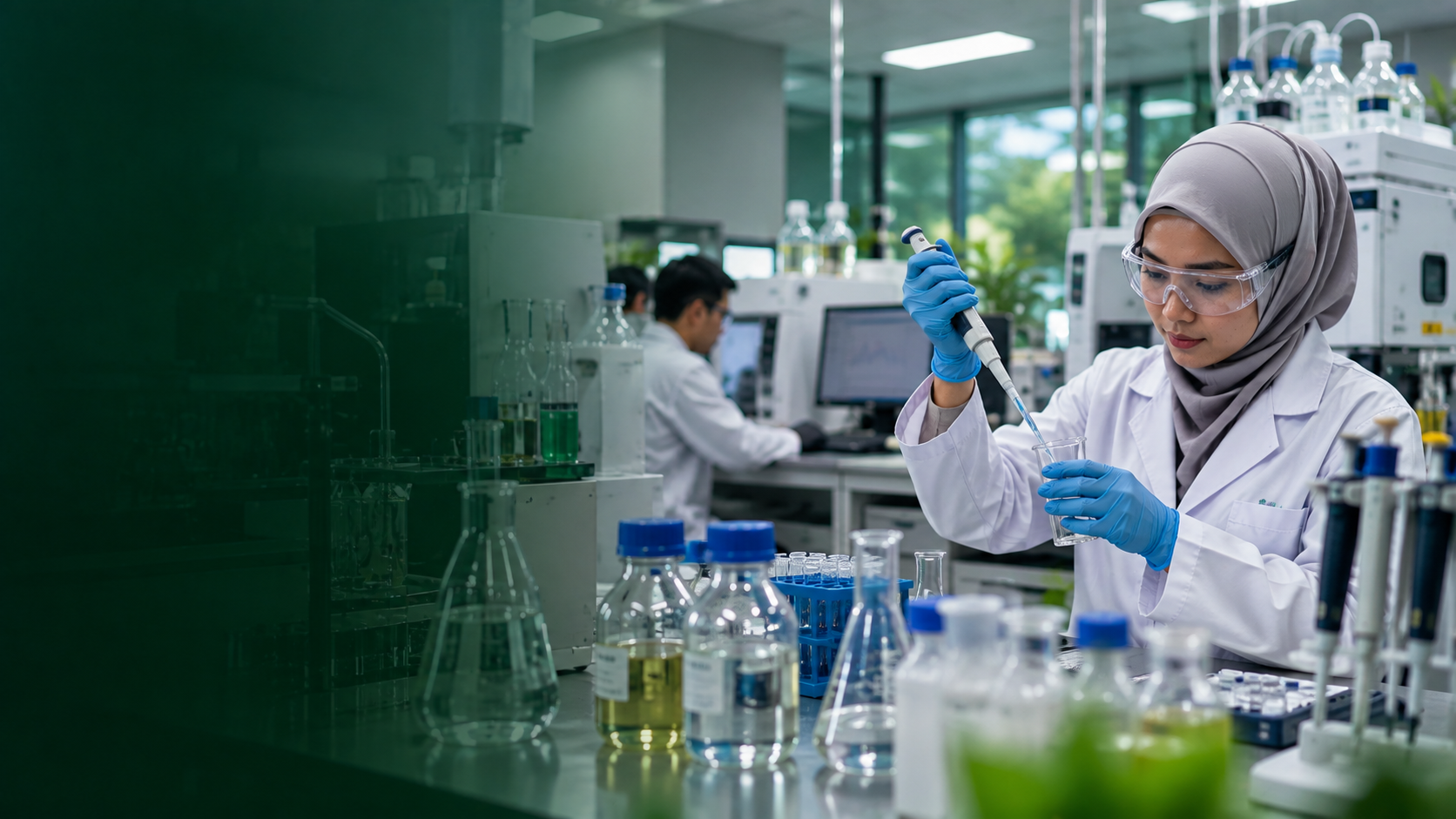
Inside Our Environmental Testing Suites
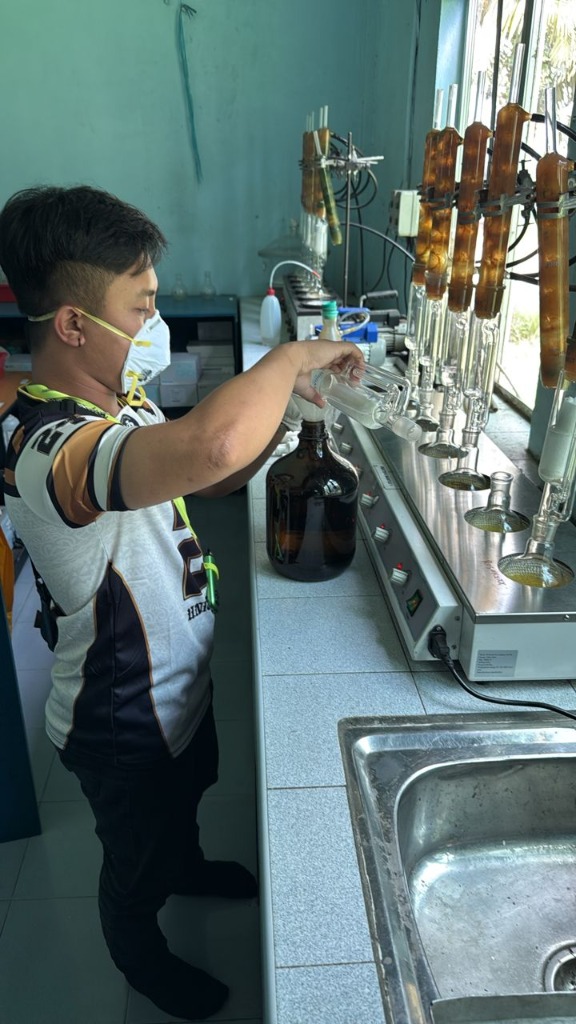
Solvent Extraction Rack
Vertical condenser distillation at FGS Environmental Laboratory to quantify hydrocarbon fractions in trade effluent.
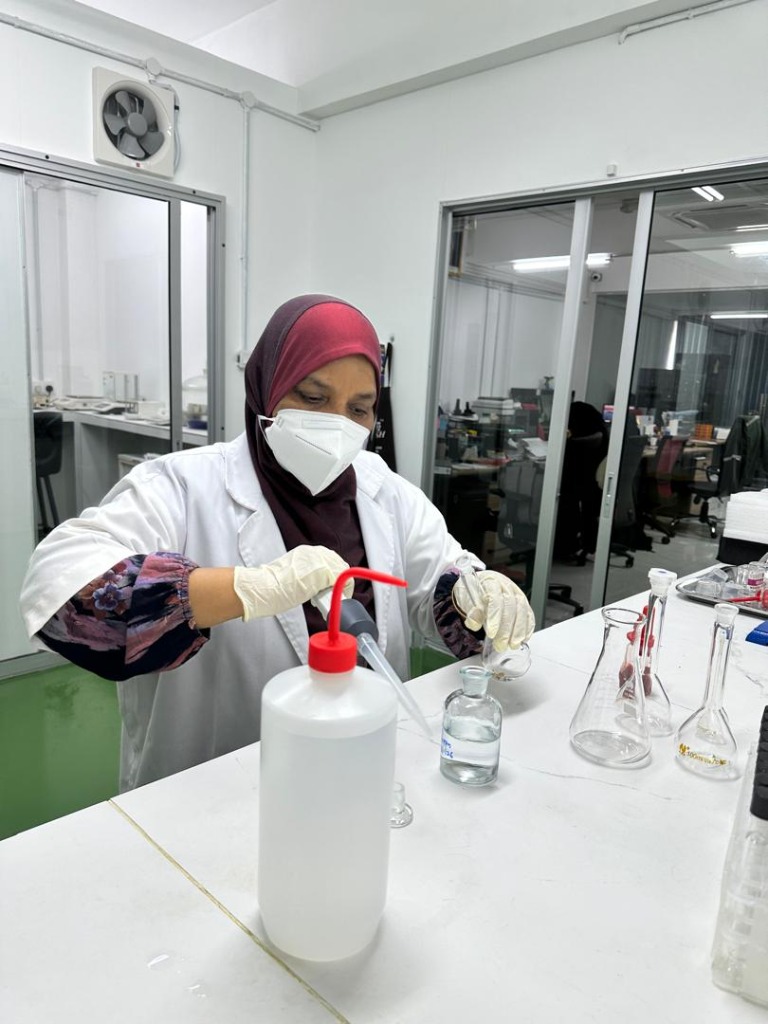
Biochemical Oxygen Demand
Standard Methods dilution, sample bottling, and DO titration for 5-day industrial effluent discharge compliance.
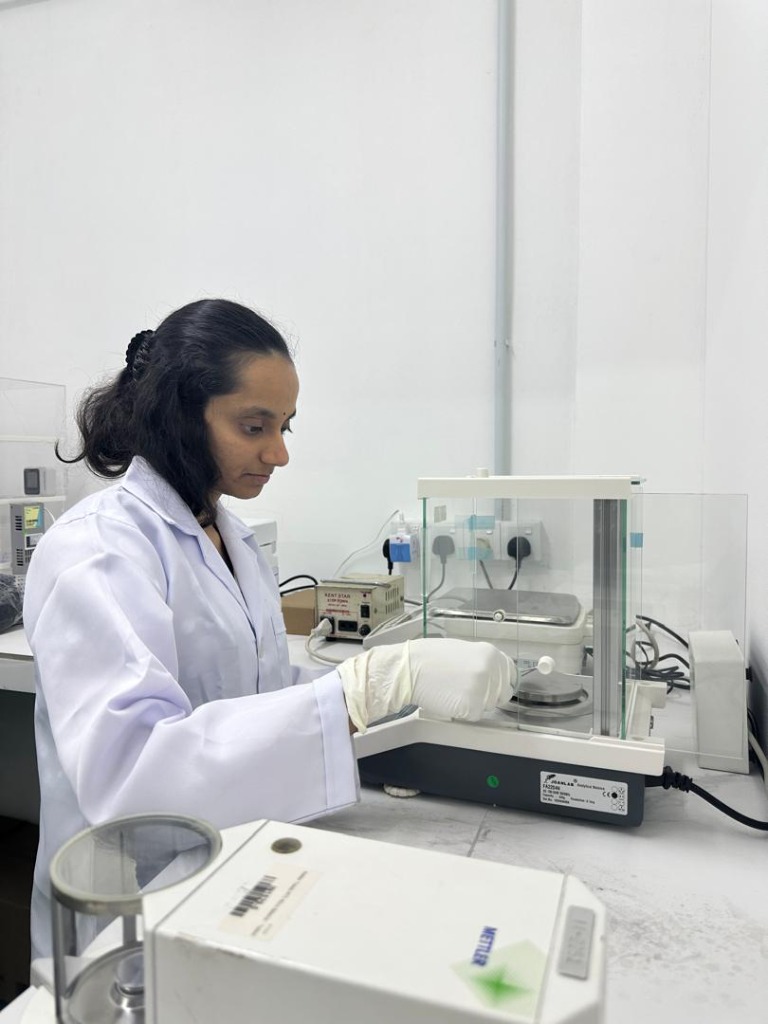
0.1 mg Analytical Balance
Precision weighing of dried glass-fiber filter discs inside draft-shielded FA2204N balance for Total Suspended Solids.
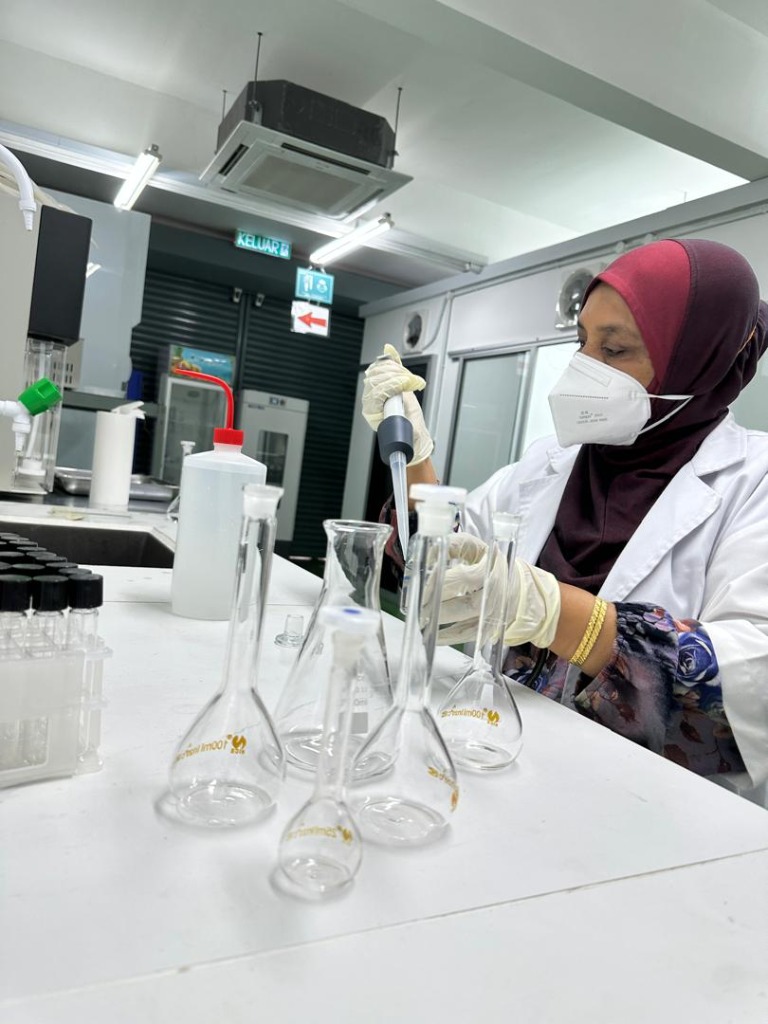
Volumetric Micropipetting
Accurate micropipette aliquot dispensing for standard addition, digestion calibration curves, and heavy metal screening.
Tested Water Sample Categories
River Water
Periodic monitoring of natural watercourses, baseline EIA assessments, and river pollution tracking.
Groundwater
Analysis of perimeter monitoring wells around landfills, heavy industrial plants, and chemical storage depots.
Potable Water
Verifying physical and chemical standards for drinking water and camp water supplies.
Industrial Wastewater
Monitoring equalization basins, aeration tanks, and chemical precipitation stages in industrial plants.
Trade Effluent
Testing final treated effluent discharge points for Standard A and Standard B compliance under Environmental Quality (Industrial Effluent) Regulations.
Chemical, Physical & Heavy Metal Parameters
Benchmarking against the Environmental Quality (Industrial Effluent) Regulations (Standard A & Standard B) and National Water Quality Standards.
Biochemical Oxygen Demand (5-Day)
Determines the amount of dissolved oxygen consumed by microorganisms during aerobic decomposition of organic matter.
Chemical Oxygen Demand
Quantifies the total equivalent of organic compounds susceptible to strong chemical oxidation in effluent.
Total Suspended Solids
Measures the dry weight of suspended non-filterable solid particles trapped on a standard glass fiber filter.
Hydrogen Ion Activity (pH)
Indicates the acidity or basicity of water, critical for effluent compliance with Environmental Quality Regulations.
Temperature
Determines thermal discharge compliance to avoid thermal pollution in receiving water bodies.
Dissolved Oxygen
Measures free oxygen dissolved in water samples essential for aquatic ecosystems and biological degradation.
Oil & Grease
Extraction and quantification of solvent-extractable petroleum hydrocarbons, animal fats, and grease.
Ammoniacal Nitrogen
Measures toxic un-ionized ammonia and ammonium ions resulting from nitrogenous waste breakdown.
Turbidity
Measures cloudiness or haziness caused by large numbers of individual microscopic particles.
Conductivity / Electrical Conductivity
Quantifies the capacity of water to conduct electrical current, directly correlated with total dissolved ionic solids.
Lead (Heavy Metal)
Trace toxic heavy metal determination regulated under Environmental Quality (Industrial Effluent) Regulations.
Cadmium (Heavy Metal)
Screening of cumulative hazardous heavy metal found in industrial electroplating, batteries, and paints.
Chromium (Heavy Metal)
Testing for toxic chromium species originating from tanning, dyeing, and metallurgical processes.
Mercury (Heavy Metal)
Ultra-trace detection of highly bioaccumulative mercury compounds.
Arsenic (Heavy Metal)
Quantitative analysis of hazardous metalloid contaminants in groundwater and industrial run-off.
Sample-to-Report Workflow
Sample Collection & Preservation
Samples gathered from discharge outfalls, boreholes, or river points using proper containers, temperature controls, and Chain-of-Custody (COC) documentation.
Log-in & Calibration
Samples are logged, assigned unique analytical codes, and pre-screened. Instruments are calibrated against verified analytical standards.
Analytical Testing
Executing parameter protocols: digestion, filtration, titration, spectrophotometry, and atomic absorption methods.
Quality Control Verification
Batch blank testing, duplicate checks, and matrix spike recoveries to confirm precision and reproducibility.
Technical Interpretation & Reporting
Formal Certificate of Analysis issued, benchmarking results against DOE Standard A & B criteria or relevant baseline guidelines.
Submit Samples to FGS Environmental Laboratory
Require monthly effluent testing, baseline river analysis, or heavy metal screening? Reach our analytical desk for sample bottles, preservation instructions, and chain-of-custody forms.